Loading blog post...
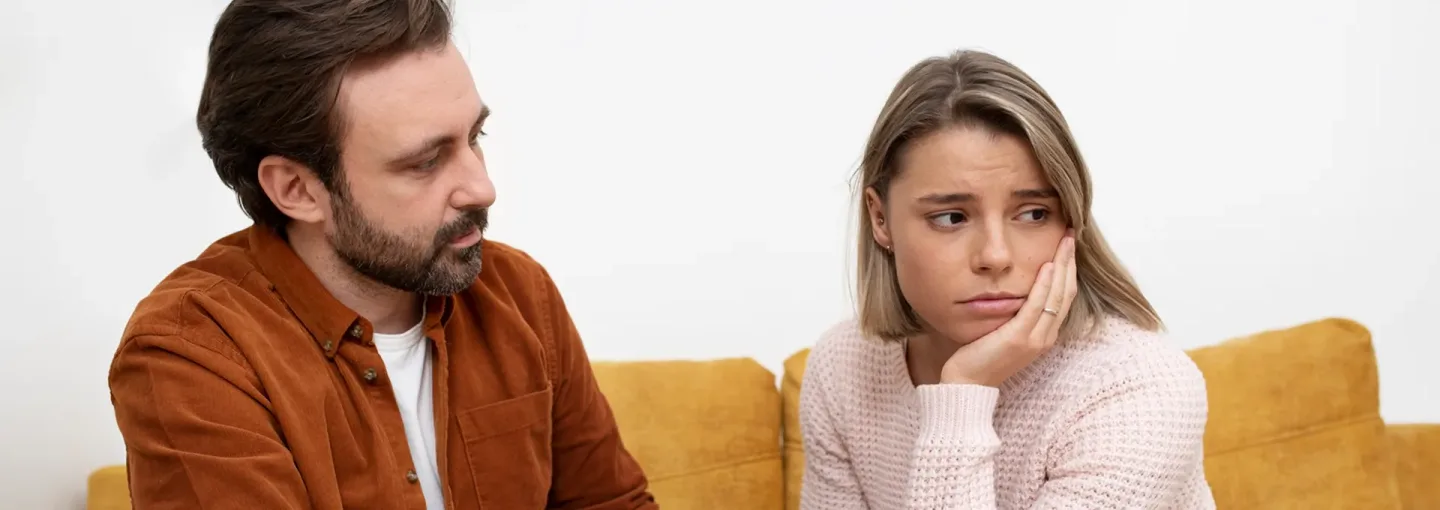
In a study from the Divorce Mediation Project, 80% of divorced men and women cited growing apart and losing a sense of closeness to their partner as a reason for divorce, according to the Gottman Institute. Gottman Institute research on divorce and growing apart
The important takeaway is that emotional distance can develop before a relationship officially ends. That distance may show up in small ways at first, which makes it easy to dismiss until the pattern becomes impossible to ignore.
Texts take a little longer to arrive. The laugh sounds a touch more polite than genuine. Plans that used to happen without a second thought need three follow-up messages just to lock in. So you sit there wondering, “Am I overthinking, or is she losing interest?"
The honest answer is most guys don’t miss the big signs. A breakup text, a canceled anniversary, a low-key fight that nobody misses. What gets missed are the small things that shifted weeks or even months earlier. By the time the loud signs show up, the emotional distance has usually been building for a while already.
She may be losing interest if she rarely initiates conversations, your chats have become short or surface-level, physical affection has noticeably decreased, or she keeps cancelling plans without making much effort to reschedule. The key is that these changes continue for several weeks rather than happening once or twice.
You may be overthinking it if there's a clear temporary reason for the change, such as work stress, a family situation, or feeling unwell. If the shift is recent and she still shows care and makes an effort in other ways, it may not mean her feelings have changed.
The biggest clue is the pattern, not one sign. Everyone has quiet or stressful periods. But when several signs appear together and continue consistently for a month or longer, it may point to genuine emotional distance rather than a temporary rough patch. Keep reading to understand the signs more clearly and what you can actually do about them.
Before getting into the list, it helps to understand why these signs slip past so many people in the first place.
Relationships rarely end because someone wakes up one morning and simply decides to stop caring. Interest fades gradually in small withdrawals that are each easy to explain away on their own. She is tired, and work has been brutal. She is just in a mood.
Any one of those excuses sounds perfectly reasonable in isolation. It is only when you step back and look at the pattern across weeks or months that the real picture comes into focus.
Relationship researcher John Gottman, who has spent decades studying couples, points to a behavior called "stonewalling" as one of the clearest warning signs. This is when a partner withdraws from interaction entirely and simply stops responding, emotionally or otherwise, according to Gottman's own research team.
It rarely shows up out of nowhere. It builds gradually, through smaller moments of disengagement that go unnoticed at first.
Men, in particular, also miss these signs for a very human reason. When you care about someone, your brain naturally looks for reasons to explain away the negative signals instead of confronting them. That's not weakness, but just how attachment works.
It does mean you need something more objective than a gut feeling alone. A real checklist is to figure out whether she's losing interest or you're genuinely overthinking.
Below is a full breakdown of the signs she's not into you anymore, more than 20 of them, pulled from relationship research, therapist interviews, and plain old lived experience, including what to actually do once you spot them.
Let's get into it.
Communication is usually the first place interest starts to fade, mostly because it takes the least effort to quietly pull back.
One of the clearest signs she's losing interest is a shift in how she texts. Long, expressive messages turn into flat one-word answers. Replies that used to come within minutes now take hours, sometimes with no explanation at all. A single slow reply doesn't mean anything. A pattern stretched across several weeks does.
Notice who's actually doing the reaching out. If you're always the one texting first, always the one asking "how was your day," and always the one restarting a conversation that's gone quiet, that imbalance is worth sitting with. Interest tends to show up as effort. And effort tends to show up as who initiates.
Early on, she may have opened up about her fears, her family, and her plans for the future. If your conversations have quietly drifted toward small talk (weather, weekend logistics, nothing real) and stayed there, that's often one of the signs she's not into you anymore. Emotional depth is usually one of the first things to go when someone starts detaching.
"Let's figure something out" used to turn into an actual date within a day or two. Now it lingers for a week unless you push it yourself. When someone's genuinely into you, making time for you tends to feel natural, not forced. When that urgency disappears, it's rarely about a packed schedule. It's about where you rank on the list.

Beyond how she communicates, there are behavioral shifts that tend to surface once emotional interest starts to decline.
A noticeable drop in hand-holding, hugging, cuddling, or general physical closeness is one of the more telling signs your partner is losing interest.
Physical affection is one of the most honest indicators of emotional connection out there, mostly because it's harder to fake consistently than words are.
Pay attention to how present she actually is when you are together. Is she checking her phone constantly, glancing around, half listening? Genuine interest usually shows up as genuine attention. When someone's mind keeps drifting elsewhere even while sitting right next to you, that's worth noticing.
Nor does every sign have to be dramatic. Sometimes it is just that she used to tell you about a weird dream or something funny that happened at the grocery store and now doesn't bother. According to therapists interviewed by HuffPost, one of the earliest signs of disengagement is when a partner stops asking questions about the small, everyday things. This happens because in a healthy relationship, that curiosity is usually automatic, not something you have to remind yourself to do.
Think back to how she used to react when you walked into a room or when your name popped up on her phone. If that spark has faded into something closer to neutral or obligatory, that energy shift is one of the signs she lost interest. That is easy to feel and hard to prove, which is exactly why it gets dismissed so often.
Small annoyances where there used to be patience are a real signal, not just a passing mood. A study out of Baylor University, published in the journal Psychological Assessment, found that withdrawal during conflict is one of the most common relationship disengagement tactics and that it's directly linked to lower overall relationship satisfaction. If she's short with you over things that never used to bother her, it may be pointing to a deeper frustration that hasn't been said out loud yet.
If she used to come to you when something was bothering her and now handles it alone or turns to friends instead, that's a meaningful shift. Being someone's go-to support system is a core part of emotional closeness, and losing that role can be one of the quieter signs she is not into you anymore.

Sometimes the signs show up less in how she treats you directly and more in how she's structuring her life around you, or increasingly, without you.
Everyone gets busy, but busy people still make time for what genuinely matters to them. If she consistently has room for friends, hobbies, or work but never for you, that's less about time management and more about priority ranking.
Occasional cancellations are just life, but if canceling has become routine and she doesn't seem particularly bothered or apologetic when it happens, that shift in tone matters. Real regret over canceling usually means she still values the time. Indifference suggests something else is going on underneath.
Whether it's a trip, a move, or long-term goals, pay attention to whether she still pictures you in her future. If she used to say "we should" and now only says "I'm going to," that small pronoun shift can be surprisingly telling.
If she is suddenly cagey about her phone, her whereabouts, or who she is spending time with, that behavior change is worth noticing. It could be one of the signs she is not interested in you anymore, especially if she was previously open about these things. At the same time, don't automatically assume something is wrong. She may simply be setting a boundary around her privacy. What matters is whether this is a noticeable change from how she normally behaved with you.
This one gets debated a lot, and social media behavior doesn't necessarily mean anything on its own. If she has stopped posting about you, quietly removed old photos, or seems noticeably more engaged with others online than with you, it doesn't automatically mean something is wrong. But when these changes appear alongside other signs, they can add weight to the overall pattern.

A real sustained drop in physical intimacy when it is a clear departure from your normal pattern together. This is one of the most direct signs she is no longer interested in you. It is worth ruling out stress, health, or other outside factors first. But an unexplained, ongoing decline is a genuine signal worth addressing head-on.
If bringing up "us," where things are headed, or how she's actually feeling, gets deflected, brushed off, or shut down entirely, that avoidance itself says something. People who feel secure and invested don't usually mind talking about the relationship. Avoidance often points to discomfort with where things actually stand.
A little jealousy isn't something to chase, but its complete disappearance can be telling too. If she used to care when someone flirted with you and now genuinely couldn't care less, it can point to emotional detachment that's already settled in.
Couples who still care fight to fix things. When someone stops fighting for the relationship altogether, there is no more pushing for resolution, just silence or a quick “fine or whatever” to make it go away. This can actually be worse than the conflict itself. It often means she has stopped seeing the relationship as worth the effort it takes to repair.
This is the sign that gets dismissed the most, and it really shouldn’t be. If you keep circling back to me, am I overthinking, or is she losing interest? And that feeling doesn’t fade after reassurance. It usually doesn't come out of nowhere. Intuition is built from dozens of small observations your conscious mind hasn’t fully sorted through yet.
Sometimes outside perspective just confirms what you've already been sensing. If people close to you, or to her, have independently mentioned a shift in how she acts around you, that's worth taking seriously instead of brushing it off as a coincidence.
This one may seem small, but a noticeable change in how someone presents themselves around their partner can sometimes reflect a shift in effort or attraction. On its own, it doesn't tell you much. But if you've also noticed changes in communication, affection, and time spent together, it becomes another part of the overall pattern.

This is the question that brings most people to an article like this, and it deserves a real answer instead of a vague “just trust your gut."
The honest way to tell the difference is pattern versus incident. One short reply, one canceled date, one distracted evening, that's just life. Everyone has an off week, but when several of the signs above show up together, consistently, over a real stretch of time, that's no longer overthinking. That's observation.
A useful gut check is to compare her behavior now to her behavior during a normal, settled stretch when things were clearly going well. This is not the honeymoon phase specifically, just a solid period. What's actually different? Be specific. A vague sense of unease is much harder to act on than "she used to text first most days, and now she rarely does."
If you can list several concrete, specific changes, not just a feeling, you're probably not overthinking. You're noticing something real.
Spotting the signs she's losing interest is only useful if it actually leads somewhere. Here's what tends to genuinely help.


Say what you've noticed in specific, non-blaming terms: "I've noticed we don't talk as much as we used to, and I wanted to check in." This invites honesty instead of defensiveness.
Resist the urge to argue with her answer or talk yourself out of what she says. If she admits she's been distant, ask what's behind it instead of jumping straight to reassurance.
Uncomfortable, but worth asking honestly. Has your own effort, attention, or presence shifted lately too? Sometimes the distance is mutual, and neither person clocked it happening in real time.
Big emotional confrontations tend to push people further away. A calm, honest conversation usually makes more room for the truth than an anxious one does.
Sometimes this conversation repairs things, and people reconnect once the disconnect finally gets named out loud. Sometimes it confirms what you already suspected. Either way, clarity beats living inside the question on a loop.
Noticing the signs she is not into you anymore is not about becoming paranoid or overanalyzing every slow text reply. It is about paying honest attention to patterns instead of single moments and trusting yourself enough to actually act on what you keep consistently observing.
If you've read through this and recognized several of these signs in your own relationship, that doesn't automatically mean it's over. It means it's time for an honest conversation, with her and with yourself, instead of another few months of quiet guessing.
You deserve clarity, and so does she. The only way to actually get there is to stop asking the question in your own head and start asking it out loud.
Our Concierge Team Is Available 24/7 To Assist You
Look for consistent changes rather than one-off behaviors. If she rarely initiates conversations, avoids making plans, becomes less affectionate, or stops showing curiosity about your life over several weeks, she may be losing interest.
Some signs she doesn't like you anymore may include consistently avoiding conversations, losing interest in spending time together, becoming less affectionate, or no longer making an effort to maintain the relationship. However, one behavior alone does not necessarily mean her feelings have changed.
Not necessarily. People can take longer to reply because of work, stress, family responsibilities, or other personal reasons. It becomes more meaningful when slower replies are part of a wider, ongoing change in how she communicates with you.
Compare her current behavior with how she normally acted when your relationship was going well. If you can identify several specific and consistent changes rather than relying only on anxiety or one isolated incident, you may be noticing a genuine shift.
Yes. Someone may become emotionally distant before they are ready to discuss ending the relationship. This can show up as less communication, affection, effort, or interest in making plans together.
No. Changes in affection can also happen because of stress, tiredness, relationship problems, or personal circumstances. A sustained decrease combined with other signs is more meaningful than a temporary change.

Crafted with sophistication for extraordinary connections.
Experience favor dating on the go.With the Favor app, you can connect with like-minded individuals, explore exclusive events, and create unforgettable moments-all at your fingertips.

© 2026 Favor in conjunction with Acadecraft Private Limited
© 2026 Favor in conjunction with Acadecraft Private Limited