Loading blog post...

Let's be completely honest about modern romance: getting a match is rarely the hard part. The real struggle is turning that notification into an actual person sitting across from you at a coffee shop.
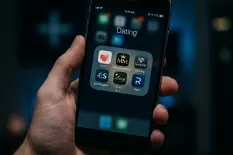
To help you skip the endless small talk and find platforms that prioritize physical meetups, this blog ranks the 11 best dating apps of 2026 across five weighted criteria: real-date success rate, user quality and authenticity, relationship potential, safety features, and user experience. Every score is applied the same way to every platform, including Favor, which is our own product.
The three best dating apps for turning matches into real dates in 2026:
Finding dating apps that work means looking past clever marketing and looking directly at actual user results. I built the scoring framework around five core criteria to identify which platforms genuinely function as real dating apps rather than digital entertainment.
Real-Date Success Rate (30%) How efficiently does a digital match convert into an offline meeting? Platforms score higher when their features discourage endless pen-pal texting and actively nudge users toward meeting in person.
User Quality and Authenticity (25%) How well does each app filter out abandoned profiles, bots, and catfishes? High scores mean the community is active, responsive, and verified.
Relationship Potential (20%) What is the average user actually looking for, a real partner, or just a quick validation hit while watching TV? This matters more than most people admit.
Safety Features (15%) Meeting a stranger always carries risk. Apps that build in background checks, in-app video calling, photo verification, and responsive moderation score higher here.
User Experience and Matching Tools (10%) Does the interface respect your dealbreakers, or does it serve you random profiles to keep you glued to the screen?
Real-date success: 9.8 × 0.30 = 2.94
User quality: 9.7 × 0.25 = 2.43
Relationship pot.: 9.5 × 0.20 = 1.90
Safety: 9.4 × 0.15 = 1.41
UX/matching: 9.2 × 0.10 = 0.92
Total: 9.60


Crafted with sophistication for extraordinary connections.
Experience favor dating on the go.With the Favor app, you can connect with like-minded individuals, explore exclusive events, and create unforgettable moments-all at your fingertips.

© 2026 Favor in conjunction with Acadecraft Private Limited
© 2026 Favor in conjunction with Acadecraft Private Limited
Rank | App | Best For | Free Version | Relationship Focus | Verification Level | Overall Score |
|---|---|---|---|---|---|---|
1 | Favor | Real connections | Yes | High | High | 9.6/10 |
2 | Hinge | Serious dating | Yes | High | High | 9.3/10 |
3 | Bumble | Meaningful conversations | Yes | High | Medium | 8.8/10 |
4 | Match | Long-term relationships | Limited | Very High | High | 8.5/10 |
5 | eHarmony | Compatibility matching | Limited | Very High | High | 8.2/10 |
6 | Tinder | Large dating pool | Yes | Medium | Medium | 7.9/10 |
7 | Coffee Meets Bagel | Quality matches | Yes | High | Medium | 7.7/10 |
8 | OkCupid | Personality matching | Yes | Medium | Medium | 7.4/10 |
9 | Facebook Dating | Free dating | Yes | Medium | Medium | 7.2/10 |
10 | Elite Singles | Professionals | Limited | High | High | 7.0/10 |
11 | Happn | Local dating | Yes | Medium | Medium | 6.8/10 |
A handful of factors separate the apps that turn matches into coffee dates from the ones that don't. First, the platform has to actively nudge users toward scheduling something in person instead of letting conversations drift for weeks. Second, the profiles have to be real: verified photos, active accounts, and a community that isn't there just to collect likes. Put those two together and you get what separates real dating apps from platforms built purely for endless swiping. A best dating app treats the first message as a stepping stone toward an actual date, not the finish line.
Safety is the third piece of the puzzle, and it matters just as much as intent. The safest dating apps for meeting new people combine mandatory photo verification, in-app video calls before you meet, and fast-response moderation, so you're not walking into a first date blind. Without these safeguards, even a platform with great matching tools can leave users exposed to catfishing or worse. That's exactly why the safest dating apps for meeting new people invest heavily in trust and safety, not just algorithms.
Put simply, the apps that actually work share three traits: they nudge toward real dates, they filter for genuine users, and they build in safety from day one. Whether you're comparing options for a serious relationship or just want more first dates, these three criteria are what separate the best dating app from the rest of the pack, and they're the same checklist worth using to spot the safest dating apps for meeting new people before you download anything new.
Favor is our platform, so this ranking has an inherent bias problem. We've applied the same five criteria to every app on this list and tried to be honest about where competitors genuinely outperform us:
All competitor data is sourced from official platform websites and publicly available app store listings. Pricing and features are accurate as of June 2026. We have not been paid for placement by any platform listed, and no competitor was notified of this article. Our goal is to help you find the right platform for your situation, not necessarily Favor.
Quick note: Favor is our own platform. Read the editorial disclosure above before treating this section as neutral.
Favor earns the top spot because it solves the single biggest problem in modern dating: low-intent scrolling. It is built specifically as the best dating app for people who are done with endless small talk that leads nowhere.
Feature | Description |
|---|---|
Verified Badge | Indicates the profile has been authenticated on the platform |
Photo Verification | Confirms that profile photos belong to the actual user |
Example Message | "Let's grab coffee this Thursday!" |
Real-Date Scheduler | Built-in feature designed to help users arrange in-person dates more efficiently |
Global Dating Insights reported that romance scam losses exceeded $1.16 billion during the first nine months of 2025.
Source: Globaldatinginsights.com
By emphasizing concrete date planning and strict profile verification, it stands out among dating apps that work by cutting out the noise entirely. The community shares one common goal: meeting in person. That focus makes it genuinely different from platforms where half the users are there to collect matches, not coffee dates.
That said, Favor's user base is smaller than Hinge, Tinder, or Bumble, sometimes significantly so depending on where you live. If you're in a smaller city or a rural area, you may find the pool frustrating. That is an honest limitation worth knowing upfront.
Quick Stats
Pros
Cons
Verdict: If you're tired of two-week text conversations that evaporate the second you mention a coffee date, Favor is worth trying. Just check the user density in your area first; the verification-first model only delivers if there are enough verified users nearby.
Best For: Singles who want a safe, focused platform built around actually meeting people.
Worst For: Anyone outside a major city or unwilling to go through upfront verification steps.

Hinge continues to prove that its "designed to be deleted" motto is more than a marketing line. It is consistently one of the top dating apps for relationships because its layout requires you to interact with specific photo captions and text prompts rather than just swiping on a face.
According to The Knot's 2025 Real Weddings Study, 36% of couples who met on a dating app got married after meeting on Hinge, more than on Tinder or Bumble combined.
Source: Theknot.com
The prompt-heavy design makes it significantly easier to leave a thoughtful opening comment that transitions naturally into making actual plans. It is one of the premier dating apps for serious relationships, and in terms of raw user base and brand trust, it legitimately outperforms Favor in most markets right now. If distance is part of your situation while things get serious, these virtual date ideas for long-distance relationships can help keep the connection strong between in-person meetups.
Quick Stats
Pros
Cons
Verdict: Hinge is the strongest mainstream option for most intentional daters. It has the user base, the profile depth, and the track record that Favor is still building toward.
Best For: Intentional daters looking for an intuitive platform built around real compatibility.
Worst For: Casual daters or anyone who finds prompt-based profiles too much effort.

Bumble built its reputation on a single disruptive rule: women must send the first message within 24 hours of a match forming. That one change transforms the atmosphere noticeably. It removes the aggressive, low-effort openers that women typically have to wade through on open platforms.
Bumble recently introduced "Opening Moves" to let men respond to a pre-set profile question, which eases some of the one-sided pressure. The power balance still leans toward safety and intentionality, which is the point.
One honest downside: Bumble's free tier has become noticeably more restricted over the past year. Features that used to be free now sit behind a paywall, which pushes the experience closer to Match or Hinge in terms of cost.
Quick Stats
Pros
Cons
Bumble's own Q3 2025 earnings report shows total paying users dropped 16% year-over-year, from 4.3 million to 3.6 million. Restricting the free tier appears to be pushing people away rather than converting them to paid subscribers.
Source: Bumble Inc. Q3 2025 SEC Filing
Verdict: Bumble is a strong option if you want a large user pool inside a structure that reduces aggressive or unwanted contact. For women especially, that structure makes a real difference.
Best For: Women who want to control the initial tone and men who prefer an organic invitation to start a conversation.
Worst For: Anyone who doesn't check their phone daily, the 24-hour expiry kills matches fast.

Match is the oldest major player in this space, and it has adapted well. It stands out as a reliable choice among dating apps for serious relationships partly because of what it costs. Putting money down filters out casual browsers in a way that no algorithm can fully replicate.
A marriage counselor I spoke with put it plainly: the financial barrier is a feature, not a flaw. The user base skews older, from late twenties through retirement, and people here are mostly looking for a life partner, not something to do on a Tuesday. If you're specifically looking for partners who are financially established, the best millionaire dating sites narrow that filter even further.
Quick Stats
Pros
Cons
Verdict: If you are over thirty and done with casual swiping apps, Match is one of the more sensible investments you can make. The events feature alone sets it apart from anything else on this list.
Best For: Mature singles intentionally looking for long-term, serious commitment.
Worst For: Casual daters or anyone unwilling to pay, the free tier is barely functional.

If you want an app that does the heavy compatibility lifting for you, eHarmony is the one. It is a premium option among dating apps for relationships that starts with a lengthy psychological personality assessment when you sign up.
The initial quiz runs 20 to 30 minutes. That is not a bug; it is the entire point. Anyone unwilling to spend half an hour answering thoughtful questions about themselves is almost certainly not serious about finding a partner. The quiz weeds them out before they ever appear in your matches.
Quick Stats
Pros
Cons
Verdict: eHarmony is not a Friday-night impulse download. It is a focused matchmaking tool for people who are ready to be intentional about finding a spouse and are willing to pay for the structure that supports it.
Best For: Marriage-minded individuals who value psychological compatibility over quick visual swiping.
Worst For: Anyone wanting to browse casually, the 30-minute signup quiz filters them out by design.

You cannot write a guide about the best dating apps without talking about Tinder. It invented the modern swiping mechanic, and it still has no equal in terms of raw scale. While it has a reputation for being casual, it remains a useful tool simply because of the numbers.
I have personally seen people find long-term relationships and marriages on Tinder, purely because the math eventually works in your favor at that scale. The catch is that Tinder's gender balance is skewed heavily toward men, burnout and ghosting rates are high, and sorting through low-effort profiles takes real patience.
Quick Stats
Pros
Cons
Verdict: Tinder is a volume play. If you have a strong profile, realistic expectations, and the patience to filter through noise, it is a tool you probably shouldn't ignore, especially in smaller markets where the alternatives have thin user bases.
Best For: Singles who want maximum exposure and a large pool of local matches.
Worst For: Anyone with low patience for ghosting, low-effort openers, and high-volume noise.

Coffee Meets Bagel is the anti-Tinder. Instead of an endless stream of profiles to flip through, it gives men a small, curated batch of "Bagels" every day at noon. Women are then shown the profiles of men who have already expressed interest.
I find this approach takes the frantic urgency out of online dating entirely. It slows things down enough that you actually read what someone wrote before making a choice. That shift in pace makes it an effective choice among dating apps for real connections, if you can accept the slower rhythm.
The main limitation is coverage. Outside major metropolitan areas, the daily batch can feel very thin, and waiting 24 hours for a reset gets old fast.
Quick Stats
Pros
Cons
Verdict: A good option for busy people who want to spend five or ten minutes a day on dating, not two hours. Just know that the model works best when you're in a city with a decent active user base.
Best For: Daters who prefer a slow, intentional pace over high-volume swiping.
Worst For: Anyone outside a major metro, the daily batch gets thin fast in smaller markets.

OkCupid remains relevant among dating apps for real connections because of its question engine. You can answer anywhere from 15 to hundreds of multiple-choice questions covering everything from climate opinions to relationship structure preferences.
The app uses that data to calculate a match percentage displayed on every profile. From experience, this system is genuinely useful for identifying dealbreakers before you ever send a message, things like political alignment, views on having children, or lifestyle habits that are awkward to bring up cold.
The platform is also among the most inclusive on this list, offering extensive options for gender identity and orientation that many mainstream apps still handle poorly.
The downsides are real. The free version is cluttered with ads to a degree that affects usability, not just aesthetics. And OkCupid carries a noticeably high proportion of inactive accounts, profiles that were created, never maintained, and still appear in search results. If you go in, answer the questions honestly and thoroughly. The match percentage is only as accurate as the data you give it.
Quick Stats
Pros
Cons
Verdict: OkCupid is worth it if you are someone who wants to know where a potential match stands on the things that actually matter to you before investing any emotional energy.
Best For: Singles who want data-driven insight into a match's values before meeting.
Worst For: Anyone who finds lengthy questionnaires tedious or wants a clean, ad-free experience for free.

Facebook Dating is built directly into the main Facebook mobile app, and it is entirely free: no premium tiers, no hidden feature walls, no daily like limits. For a zero-cost option, it genuinely outperforms expectations.
It works well because it uses your existing groups and event interests to suggest local singles, which means matches tend to share actual real-world overlap with your life. The limitation is that it only runs through the mobile app; there is no desktop version, and some people have a strong personal aversion to mixing social networks with dating.
Quick Stats
Pros
Cons
Verdict: For a free tool, it is surprisingly solid. If cost is a real factor and you're already on Facebook, it is worth 20 minutes to set up a profile.
Best For: Budget-conscious singles looking for a simple, completely free way to meet locals.
Worst For: Anyone with privacy concerns about mixing their social identity with dating.

Elite Singles caters to an explicit niche: educated, career-focused singles who want a partner with a similar background and drive. The platform states that the majority of its active members hold a university degree, which creates a noticeably different environment than general-audience swiping apps.
That difference is the entire value proposition. Finding someone who genuinely understands the demands of a high-pressure career, the unpredictable hours, the travel, and the mental bandwidth it consumes is difficult on platforms designed for the median user. Elite Singles attempts to pre-filter for that shared context.
Profiles go through manual validation by a moderation team rather than relying solely on automated checks, which keeps fake account rates low compared to platforms using software-only moderation. The daily match curation (3–7 profiles) also keeps the experience from becoming overwhelming, though it frustrates users who want to browse more actively.
The honest limitation is pool size. The narrower the audience, the smaller the daily volume, and outside major cities, that volume can feel genuinely thin. The subscription price is also among the highest in the industry, which makes the pool-size issue feel more significant when you're paying for it.
Quick Stats
Pros
Cons
Verdict: If your career is central to your identity and you want a partner who shares that drive, the subscription cost has a real argument behind it. Go in knowing the pool is smaller, and manage expectations accordingly.
Best For: Educated professionals who prioritize shared ambition and intellectual compatibility.
Worst For: Anyone in a smaller city or unwilling to pay among the highest subscription fees in the industry.

Happn takes a different approach entirely. Using your phone's GPS, it tracks your movements and shows you a timeline of other users you have physically crossed paths with throughout the day.
Testing this out in a busy downtown neighborhood, it is genuinely interesting to see profiles appear showing that you were in the same bakery or grocery store that afternoon. It bridges the gap between digital matching and the kind of accidental encounters that used to happen before everyone was looking at their phones. The built-in icebreaker, "we were both at the same coffee shop on Tuesday", is hard to manufacture on any other platform.
The limitation is an obvious one: if you live somewhere rural or low-density, the crossed paths timeline will be nearly empty.
Quick Stats
Pros
Cons
Verdict: A clever concept that works well in dense cities. If you live somewhere walkable and populated, it is worth adding alongside another app.
Best For: City dwellers who want to connect with people they already share physical space with.
Worst For: Anyone in a rural or low-density area, the crossed paths timeline will be nearly empty.

A few platforms that didn't make the primary eleven but are worth knowing about:
Plenty of Fish: Still carries a significant user volume, but the interface has become cluttered with ads and live-streaming features that distract from actual matching.
HER: A well-designed, safe app built specifically for queer women and non-binary singles. Excluded from the main ranking only because it serves a specific rather than a general audience.
Grindr: pioneer of location-based matching for the queer male community, with high engagement metrics. Its niche focus makes it a poor fit for a general listicle.
The League requires a LinkedIn connection and a waitlist acceptance. High exclusivity, low accessibility for the average single person.
There is no perfect platform for everyone. The trick is matching your goal to the platform's design.
Choose Favor if:
Choose Hinge if:
Choose Bumble if:
Choose Match if:
Choose eHarmony if:
Choose Tinder if:
Choose Coffee Meets Bagel if:
Choose OkCupid if:
Choose Facebook Dating if:
Choose Elite Singles if:
Choose Happn if:
Pick one or two platforms that match your energy. Be honest in your profile. And don't overthink the moment to suggest a real-world coffee; that's the whole point.
Looking for more help before you dive in? These guides cover the next steps:
Our Concierge Team Is Available 24/7 To Assist You
Hinge wins for most people. Larger user base, deeper profiles, and stronger relationship outcome data. Choose Favor only if getting to an in-person date fast is your primary goal, and you're in a major city.
Depends on the priority. Bumble wins on inbox quality; the women-message-first rule cuts out low-effort openers noticeably. Hinge wins on relationship outcomes. Pick Bumble for a better experience, Hinge for better results.
Hinge. Tinder generates more matches but converts fewer into actual meetups. Use Tinder only if you're in a smaller market where Hinge's user base is thin.
Match for most people, larger pool, lower price, and in-person events that no other app offers. eHarmony only if marriage is a specific goal and you want a structured compatibility process to get there.
Probably not as your primary app. The pool thins out significantly outside major cities. Use Hinge or Tinder as your main app and check Favor's local density before committing.
Tinder. Its free tier is genuinely functional. Bumble has shrunk significantly; features that used to be free now sit behind a paywall, and paying users dropped 16% YoY per its Q3 2025 filing.

Get 100+ flirty texts messages, cute openers, funny lines, playful texts, and flirting tips over text for him, for her to make them smile or laugh.
Sonali Negi
12 May 2026
Best millionaire dating sites: Explore top trusted platforms, compare unique features, and discover quality matches for serious, lasting relationships.
Sahil Das
29 June 2026
Learn how dating app verification works, how online dating identity verification protects users, and practical ways to verify profiles before connecting.
Sahil Das
17 June 2026

Discover what to text after a second date, conversation ideas, and simple tips to confidently ask for another date.
Sahil Das
01 June 2026

Confused by modern dating terms? Explore 25 dating slang terms, Gen Z relationship terms, dating abbreviations, and relationship slang words for 2026.
Sahil Das
22 July 2026

25+ virtual date ideas for long-distance relationships - FaceTime dinners, virtual date games & more. Fun, easy ways couples apart stay close every week.
Sonali Negi
12 June 2026

Not sure what to text after a first date? Learn the best messages, timing, and texting etiquette to keep the connection strong.
Sonali Negi
06 May 2026

What is a talking stage? Learn the real talking stage meaning, unspoken rules, red flags to watch for, and how to move it forward or end it the right way.
Sonali Negi
15 September 2026