Loading blog post...
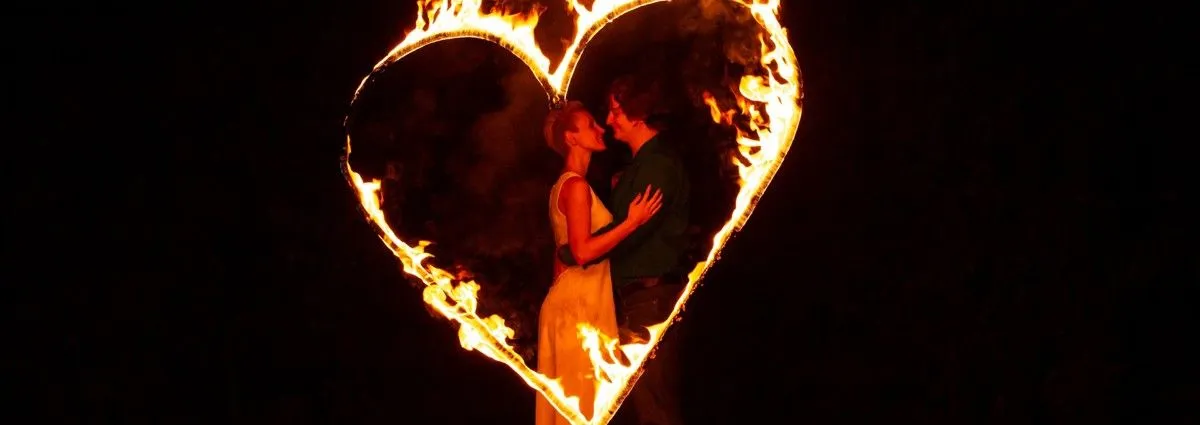
Ever met someone and felt an instant, almost unsettling sense of recognition - like you'd known them your whole life? That feeling is at the heart of the twin flame concept.
A twin flame is a spiritual belief describing two people who share one soul, split into two bodies and destined to reunite. Unlike a soulmate, a twin flame connection is said to be more intense, more challenging, and centered on mutual growth rather than comfort.
The idea has roots in astrology and New Age spirituality, and it's exploded in popularity on TikTok and Instagram over the past few years - even though there's no scientific evidence behind it. Whether you see it as a real phenomenon or a compelling metaphor, understanding the signs, stages, and psychology behind it can offer real insight into your relationships. Below, we'll break down what a twin flame is, the signs you've met one, and the stages the connection typically moves through.
A twin flame is a spiritual belief that two people share the same soul, split into two bodies whose energy mirrors each other so closely that being together feels intense and familiar. The idea has no scientific basis, but it's hugely popular online: #twinflame has roughly 2 million posts on TikTok.
The term gets thrown around a lot online, but its roots go back further than most people realize. What is a twin flame, historically speaking? The idea is loosely tied to a Greek myth from Plato's Symposium, where humans were originally created with two faces, four arms, and four legs, until the gods split them in half, leaving each person to spend their life searching for their missing counterpart.
The specific phrase "twin flame," as it's used today, is generally traced back to the New Age spiritual movement of the 1970s and 1980s, when teachers began framing twin flames as two souls at an advanced spiritual level who incarnate separately in order to eventually reunite.
Source: Shadow Grimoire, "The Truth About Twin Flames"
Who exactly coined the term is genuinely disputed; different spiritual writers and teachers have claimed credit over the decades, so treat any single "official origin" story with a healthy amount of skepticism.
So what does the twin flame definition actually mean in practice? At its core, it's the belief that one soul can split into two separate people who are meant to find each other in this lifetime, or across several. Unlike a soulmate, who's often described as a compatible match, a twin flame is framed as more like looking in a spiritual mirror. That's why people describe a twin flame connection as intense: you're not just meeting someone new; you're supposedly meeting a reflection of yourself, flaws included.
Is it religious? Not exactly. It doesn't belong to any single religion. It's more of a spiritual or metaphysical belief that's become popular through astrology, tarot, and wellness spaces on social media. And it's landed on genuinely fertile ground.
60% of U.S. adults say they believe in the idea of soulmates, with women (64%) somewhat more likely than men (55%) to hold that belief.
Source: YouGov, "Do Americans believe in the idea of soulmates?"
Twin flame belief sits on that same emotional foundation, just with an extra layer of spiritual mythology stacked on top. Whether you take it literally, symbolically, or not at all really comes down to personal belief.

Crafted with sophistication for extraordinary connections.
Experience favor dating on the go.With the Favor app, you can connect with like-minded individuals, explore exclusive events, and create unforgettable moments-all at your fingertips.

© 2026 Favor in conjunction with Acadecraft Private Limited
© 2026 Favor in conjunction with Acadecraft Private Limited
People who believe in twin flames often describe a specific set of feelings or experiences that supposedly signal you've met yours. None of this is proven; it's based on shared personal accounts rather than research, but here's what tends to come up again and again when people talk about twin flame signs.
A lot of people describe an immediate sense of "knowing" someone, almost like recognizing a person they've never actually met. It's less about attraction and more about a strange familiarity. This is usually the first thing people mention when asked how to know your twin flame.
A twin flame connection is often described as emotionally overwhelming. Conversations go deep fast, and there's a sense that this person understands you on a level most people never reach.
Many who believe they've met a twin flame point to overlapping backgrounds, similar childhoods, similar struggles, or timing that feels too coincidental to ignore.
Because a twin flame is supposed to mirror you, the twin flame relationship often brings your own patterns and insecurities to the surface. People frequently describe this as uncomfortable but transformative.
Repeating numbers, unexpected coincidences, or a sense that the universe keeps nudging the two of you together, these are commonly cited as signs of a twin flame.
It's common for people to describe cycles of getting close, pulling away, and coming back together. This on-again, off-again pattern is one of the more talked-about parts of a twin flame relationship, and it feeds directly into what believers call twin flame separation and twin flame reunion.
Beyond physical attraction, people often describe a pull that feels almost magnetic or impossible to explain logically. That kind of magnetic pull is really just sex appeal operating on overdrive - the instinctive draw someone gives off before either person has said a word. That magnetism often shows up in physical ways early on - from lingering eye contact to the first kiss. Interestingly, the types of kisses shared between two people can reflect the depth of that connection long before either person puts a label on it.
Worth saying clearly: none of these signs are exclusive to twin flames. Intense chemistry, deep conversations, and even turbulence can happen in plenty of relationships that have nothing to do with the concept. If you're trying to figure out how to know your twin flame, it helps to remember that intensity by itself isn't proof of anything spiritual; sometimes it's just intensity.

Believers often describe the twin flame journey as unfolding in stages. Not every relationship follows this exact order, and plenty of people who believe in twin flames say their own experience skipped steps or looped back around. Still, here's the general framework that shows up most often when people map out twin flame stages.
The initial encounter, often described as unexpected or oddly timed.
A period where the connection starts to feel more significant, sometimes triggering personal reflection or spiritual interest.
Old wounds, insecurities, or fears start to surface, testing the relationship's strength.
Tension builds, often leading to conflict or emotional distance.
One or both people pull away, sometimes for extended periods. This is where the term twin flame separation comes from.
This dynamic often plays out during the separation stage. One person, the “runner,” pulls back out of fear or overwhelm, while the other, the “chaser,” tries to close the distance. Believers describe the twin flame runner chaser stage as one of the most painful parts of the journey, since it can leave both people feeling unseen. The pattern is usually said to ease only once the runner stops running from their own fear rather than from the other person.
Sometimes described as part of surrender, this is the stretch where each person works on themselves independently, processing what came up during the crisis and separation stages. Believers see the twin flame healing stage as necessary groundwork, since going into a reunion without doing this inner work is thought to just repeat the same cycle.
A stage of personal healing and letting go of control over the outcome.
The two people reconnect, ideally with more emotional maturity than before, which believers call a twin flame reunion.
It's worth repeating: this isn't a guaranteed sequence. Some people believe they've experienced every stage of the twin flame journey; others say only a couple of these ever applied to them.

These two terms get mixed up constantly, but within twin flame belief systems, they're treated as pretty different ideas. The twin flame vs soulmate debate usually comes down to intensity and purpose.
Column 1 | Twin Flame | Soulmate |
|---|---|---|
Purpose | Personal growth and self-confrontation | Companionship and emotional support |
Intensity | Often described as overwhelming or turbulent | Usually described as comfortable and steady |
Relationship | Believed to be one soul split in two | Believed to be two compatible, separate souls |
Challenges | Frequent conflict, testing, and separation | Fewer dramatic ups and downs |
Can there be more than one? | Typically believed to be just one | Many believe you can have multiple soulmates |
Romantic only? | Usually framed as romantic, though not always | Can be romantic, platonic, or familial |
The short version, when it comes to soulmate vs twin flame: a soulmate is generally described as easy and supportive, while a twin flame is described as intense and, at times, difficult, supposedly because it forces personal growth rather than just offering comfort.
There's actually some real psychological research that touches on this exact split, even if it doesn't use the word "twin flame." Psychologists studying relationship beliefs generally sort people into two camps: those with a "destiny" mindset, who believe you're meant to be with one specific person, and those with a "growth" mindset, who believe relationships develop and strengthen through effort over time.
People who lean toward the destiny belief, the kind of thinking baked into both soulmate and twin flame ideas, are actually more likely to break up, while people with a growth mindset tend to have more stable relationships and handle conflict better, according to Dr. Gary Lewandowski, a psychology professor at Monmouth University who researches romantic relationships.
Source: Monmouth University Polling Institute, "Most Want a Partner Like Them"
That's not a knock on believing in twin flames specifically, but it's a useful thing to know if you're the type to lean hard on the difference between twin flame and soulmate as a way of explaining why a relationship feels chaotic.

This is where things get complicated, and it's a fair question to ask before getting swept up in the idea.
Some twin flame relationship stories, according to believers, do settle into something stable, especially once both people work through the "testing" and "crisis" stages and come out the other side with better communication. When that happens, it's often described as a genuinely healthy, grounded partnership. As that stability builds, many couples ease into sharing the relationship publicly rather than announcing it all at once - a pattern often called a soft launch relationship, where you hint at someone new before fully going public. That's very different from a partner who keeps you out of sight indefinitely - if months go by and you're still not introduced to friends, family, or their social media, it may be worth understanding the pocketing meaning in relationship dynamics before assuming it's just a slow burn.
But it's also worth being honest here: the intensity that makes a twin flame connection feel so significant can just as easily tip into unhealthy attachment. Constant cycles of breaking up and getting back together, mistaking chaos for chemistry, or excusing poor treatment because "it's just part of the journey", these are patterns worth paying attention to, regardless of what label you put on the relationship.
This lines up with what relationship researchers have found more broadly: leaning too heavily on the belief that a relationship is fated to work out, rather than something you build together, is linked to lower relationship stability.
Source: Monmouth University Polling Institute, "Most Want a Partner Like Them"
Personal growth, honest communication, and self-awareness matter far more to a relationship's long-term health than whether it fits a spiritual framework. And plenty of connections people describe as twin flames, by believers' own accounts, separate permanently, sometimes because the relationship simply wasn't meant to be romantic, and sometimes because one or both people weren't in a healthy place to sustain it.
If you're navigating your own twin flame separation, it's worth asking whether the relationship is actually healthy, independent of whatever spiritual story you've attached to it.
It also helps to separate the feeling of a connection from the health of the actual relationship. A twin flame connection can feel enormous and still not be good for you. Intensity is not the same thing as compatibility, and "we can't stay away from each other" is not automatically a green flag. In fact, this is exactly where the difference between love and in love becomes useful - intense infatuation can mimic deep love without actually being it.
If a relationship you've labeled a twin flame connection involves repeated cycles of hurt, silence, jealousy, or control, that pattern deserves attention on its own terms, regardless of what spiritual meaning gets layered on top of it.

Because the concept has spread so widely online, a few twin flame myths have taken on a life of their own.
That #twinflame tag mentioned earlier sits around 2 million posts on TikTok alone.
Source: TikTok, #twinflame
Here's a reality check on some of the most common myths that circulate in that space.
Myth: Everyone has a twin flame. Not according to most versions of the belief. Twin flames are typically described as rare, not something everyone will encounter.
Myth: Twin flames must date. Many believers actually push back on this one. A twin flame connection isn't always framed as romantic; it can show up as a friendship or even a family bond.
Myth: Twin flames never separate. Separation is actually considered a normal, expected part of the journey in most twin flame frameworks, not a sign that something's gone wrong. It's baked right into the twin flame stages most believers reference.
Myth: Every toxic relationship is a twin flame. This is one of the more harmful misconceptions. Intensity and turmoil don't automatically mean spiritual significance; sometimes a difficult relationship is just a difficult relationship, or even a rebound relationship that's being mistaken for something deeper.
Myth: Twin flames guarantee happiness. The whole concept is built around growth and challenge, not an easy ride. Believers generally don't claim it promises a happy ending, which is part of why the twin flame meaning so many people describe online includes just as much heartbreak as connection.
It's easy to assume twin flame meaning content is a small niche corner of the internet, but the numbers say otherwise. Beyond the roughly 2 million posts under #twinflame on TikTok, the term shows up constantly across Instagram, YouTube, and psychic-reading services, often layered together with hashtags like #twinflamejourney, #twinflamereunion, and #twinflameseparation.
That kind of volume tends to track with the broader cultural appetite for destiny-style thinking about love more generally.
60% of U.S. adults say they believe in the idea of soulmates.
Source: YouGov, "Do Americans believe in the idea of soulmates?"
A separate poll found belief in a "meant to be" partner sits even higher, at closer to two-thirds of adults.
Source: Monmouth University Polling Institute, "Most Want a Partner Like Them"
Younger adults, in particular, tend to be drawn to this kind of framing, which likely helps explain why so much twin flame journey content thrives on platforms with younger user bases. This appetite for intense connection also spikes in autumn - the same reason cuffing season tends to bring a surge in people searching for meaningful bonds rather than casual ones.
None of that popularity makes the concept more "true" in a scientific sense. But it does explain why twin flame relationship content spreads so easily: it's tapping into a belief a large share of people already hold about soulmates, then adding a more dramatic, mirror-soul narrative on top of it.

Our Concierge Team Is Available 24/7 To Assist You
A spiritual concept describing two people believed to share the same soul energy, split into two separate individuals.
It refers to a soul connection thought to be more intense and mirror-like than a typical relationship, rooted in spiritual belief rather than science.
There's no definitive test. People who believe in the concept often point to instant recognition, deep emotional connection, and a sense of being challenged to grow, but these experiences aren't unique to twin flames.
Yes. Many believers describe twin flame connections as platonic just as often as romantic.
Most twin flame frameworks say no; the belief is that you have just one, since it's considered a single soul split in two.
A soulmate is generally described as compatible and comforting, while a twin flame is described as more intense, mirroring your own traits and challenging you to grow.

A soft launch is when you hint at a new relationship online without revealing your partner. See what it means and why couples do it.
Shivanya Yogmayaa
10 July 2026

Sex appeal is the quality that makes someone attractive to others. Learn what creates it and simple ways to build your own.
Shivanya Yogmayaa
24 June 2026

What does flaky person mean? See 10 real signs, why people act flaky in relationships and proven ways to deal with flaky behavior without losing yourself.
Jaya Bahaduri
12 June 2026

From a French kiss to a forehead kiss, discover 25 types of kisses and what each one really means - plus tips on romantic kissing techniques.
Sahil Das
07 July 2026

Discover hypergamy meaning, definition, examples, and psychology in dating. Learn whether hypergamy is real and its impact on modern relationships today.
Shivanya Yogmayaa
17 June 2026

Trophy wife meaning explained: origin, definition, key characteristics, and real modern examples that show why the classic stereotype rarely holds true.
Sonali Negi
07 July 2026

Learn the ick meaning in relationship, what causes the ick, how it appears in chat, and whether relationships can recover after getting the ick.
Sahil Das
15 July 2026

Learn the benching meaning in dating: what it is, 6 clear signs, benching vs ghosting, and exactly how to respond and move on for good.
Sonali Negi
13 July 2026